-
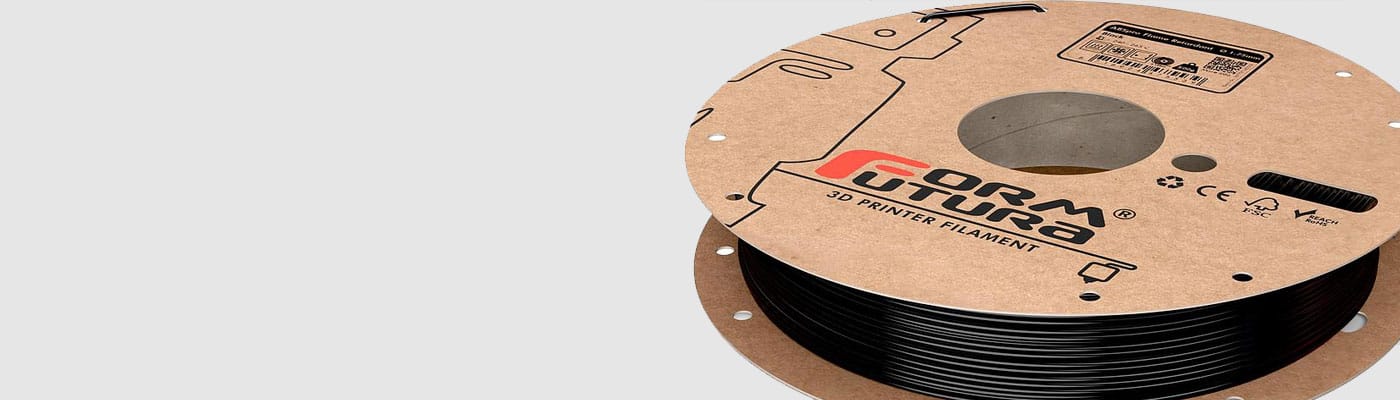
FormFutura ABSPro Flame Retardant Filament
FormFutura ABSpro Flame Retardant is a professional, halogen free, self-extinguishing filament engineered to meet UL 94 V-0 standards -
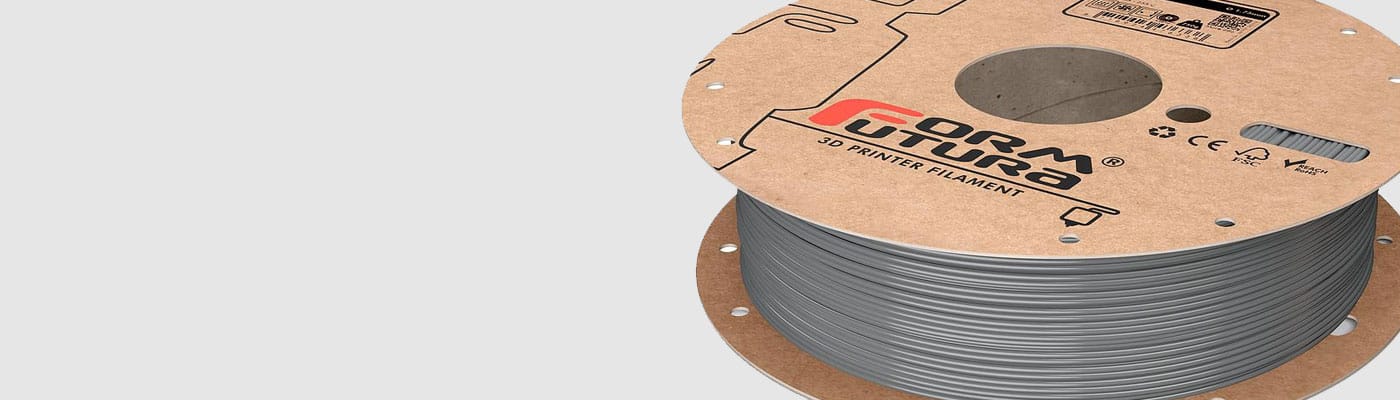
FormFutura ApolloX Filament
Formfutura ApolloX is modified with great thermal stability, improved filament flowing, zero-warping and flawless first- and interlayer adhesion -
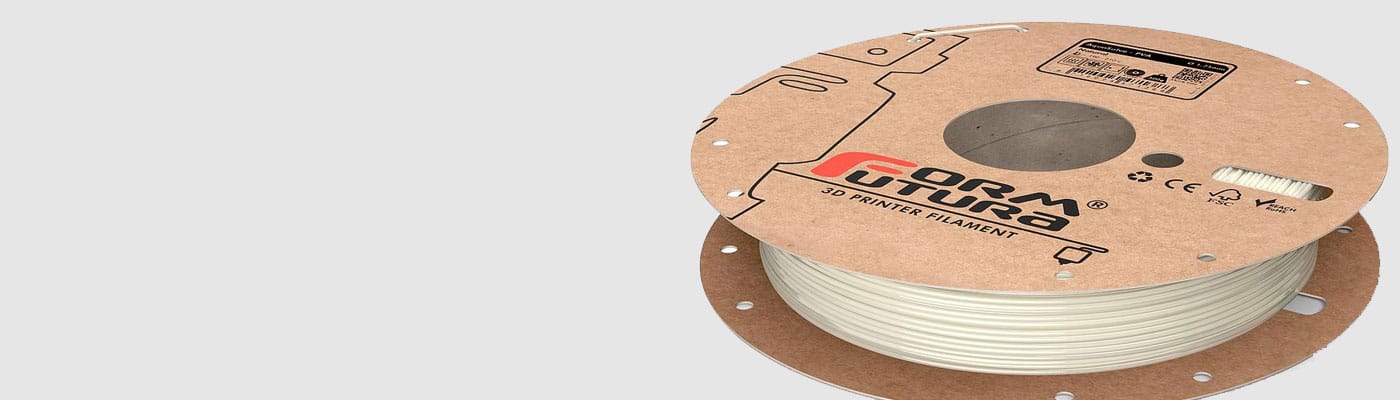
FormFutura AquaSolve PVA Filament
FormFutura AquaSolve PVA (polyvinyl alcohol) is a water-soluble support material for complex multi-extrusion 3D printing. -
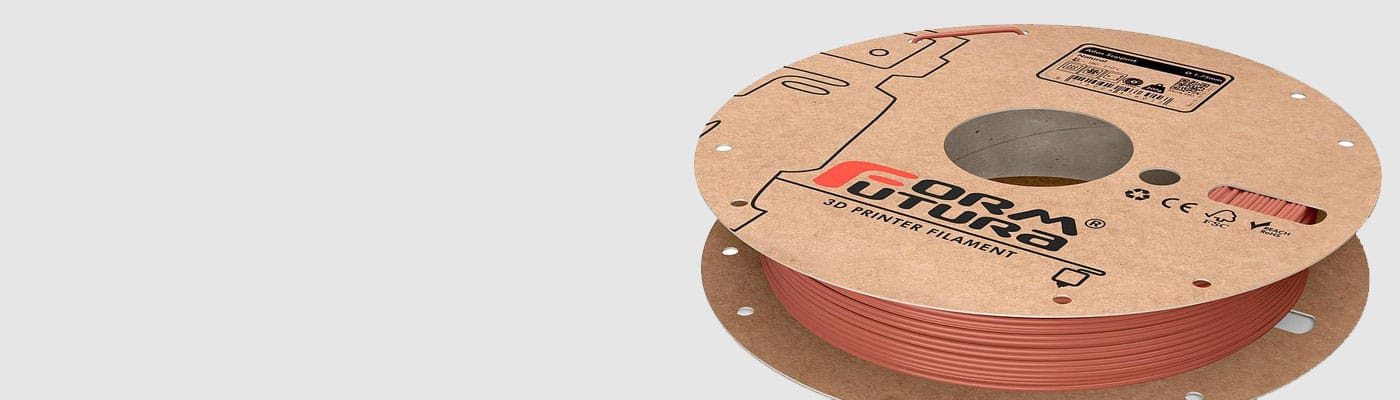
FormFutura Atlas Support Filament
FormFutura Atlas Support is a water-soluble PVA support material for complex multi-extrusion 3D printing with PETG based materials. -
FormFutura CarbonFil Filament
Reinforced with 20% ultra-light & long carbon fibres FormFutura CarbonFil is twice as stiff as HDglass and is... -
FormFutura Centaur PP Filament
FormFutura Centaur PP, lightweight and high-performance Polypropylene, engineered for outstanding mechanical properties & superb adhesion. -
FormFutura ClearScent ABS Filament
FormFutura ClearScent ABS combines good mechanical properties & translucency that's easy to process, limited warping & limited styrene... -
FormFutura Crystal Flex Filament
FormFutura Crystal Flex yields formability, toughness, and clarity into is a high-performance semi-flexible 3D printer filament. -
FormFutura EasyFil HIPS Filament
FormFutura EasyFil HIPS, high-performance & easy to print High Impact PolyStyrene, softer and more flexible than average HIPS... -
FormFutura HDglass Filament
FormFutura HDglass, high performance filament resulting in an amorphous, high strength, high gloss and ultra-transparent 3D printer filament -
FormFutura Helios Support Filament
FormFutura Helios Support, water-soluble PVA support for complex multi-extrusion printing with styrene-based materials or thermoplastics -
FormFutura Matt PLA Filament
FormFutura Matt PLA contains a recycled content of more than 50% and is modified to have a rough... -
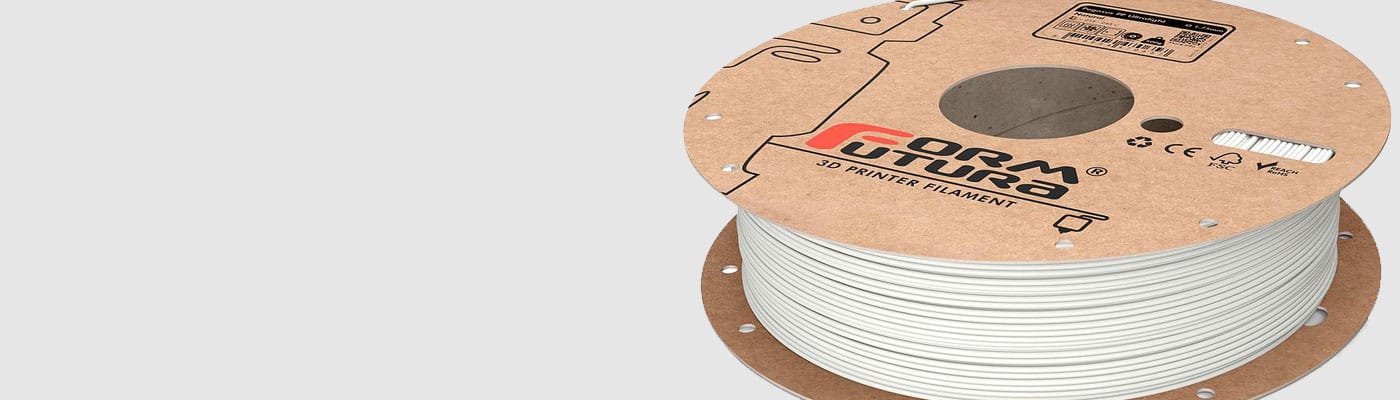
FormFutura Pegasus PP Ultralight Filament
FormFutura Pegasus PP Ultralight combines all the mechanical properties of PP with an extremely lightweight -
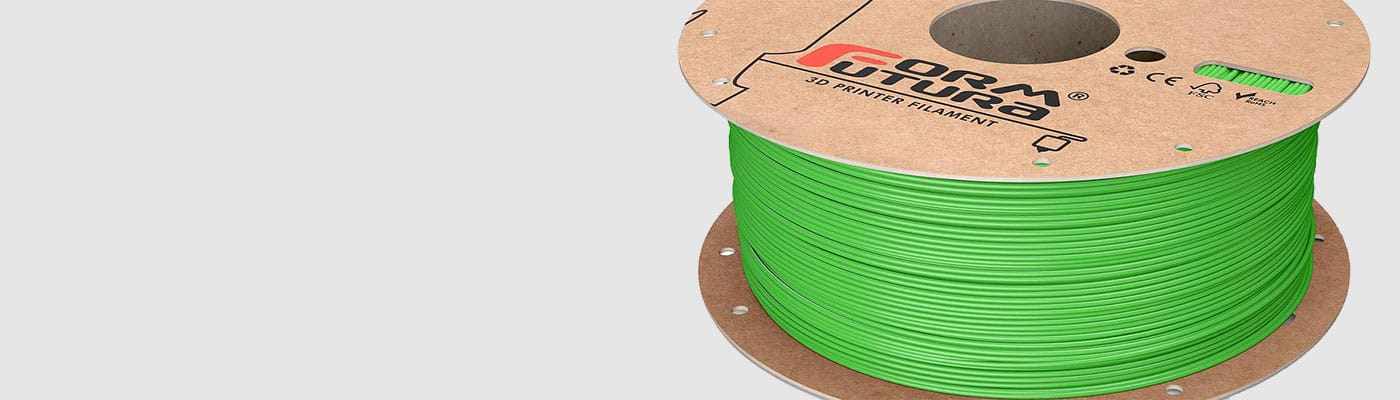
FormFutura Premium ABS Filament
FormFutura Premium ABS has great thermal stability and flowing behaviour, which is essential for 3D printing. -
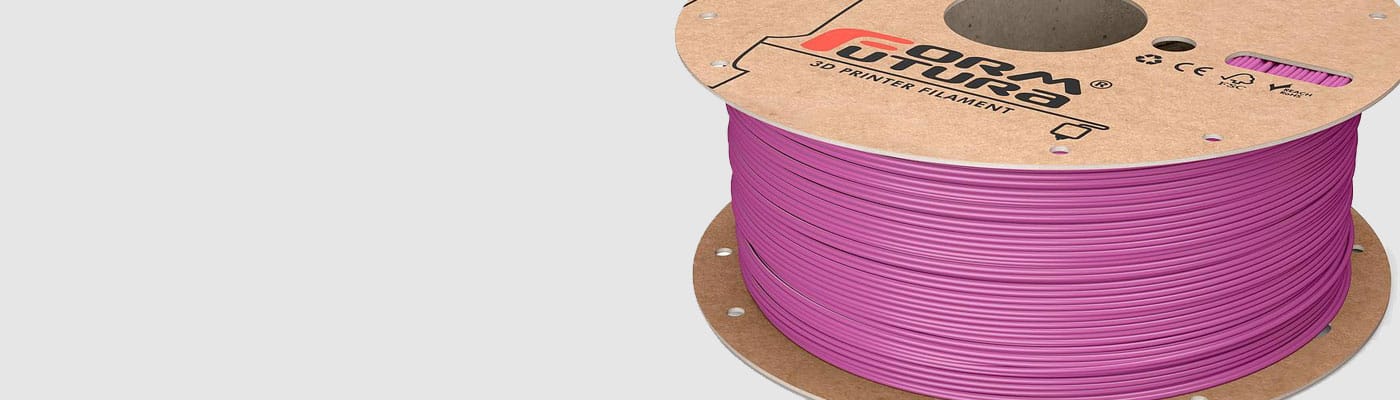
FormFutura Premium PLA Filament
FormFutura Premium PLA, high-end general purpose Poly-Lactic Acid, which is more pure and less modified than our EasyFil... -
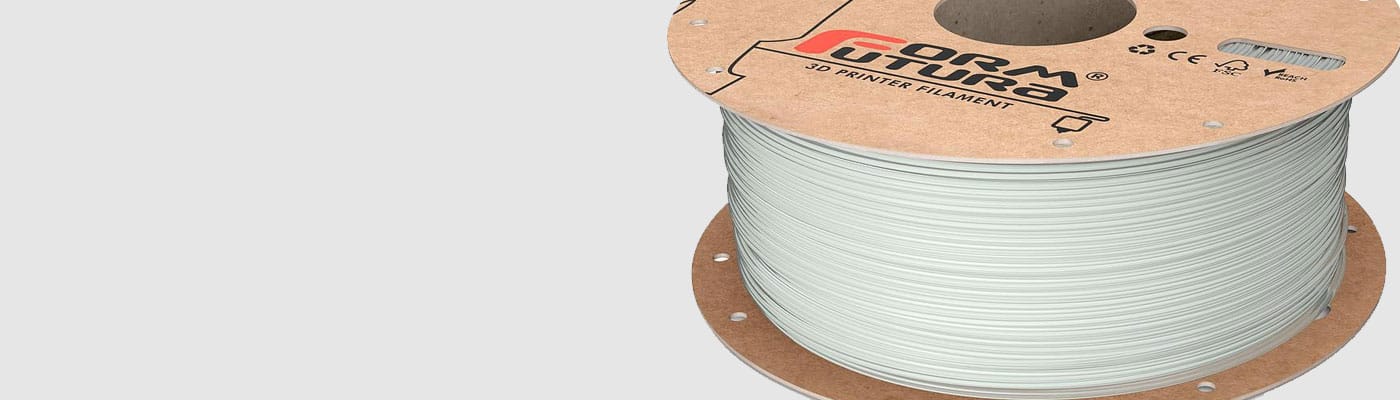
FormFutura Python Flex Filament
FormFutura Python Flex is a high-performance flexible thermoplastic polyurethane (TPU) filament, designed for high speed printing. -
FormFutura ReForm rPLA Filament
FormFutura ReForm rPLA, a sustainable initiative to efficiently manage residual extrusion waste streams & re-use them in high-end... -
FormFutura ReForm rTitan Filament
ReForm rTitan is based on exactly the same formulation as our TitanX filament range but is made out... -
FormFutura STYX-12 Filament
FormFutura STYX-12, industrial PA12 grade nylon filament, combines excellent mechanical, chemical & hygroscopic properties with printability. -
FormFutura Thibra3D Skulpt Filament
FormFutura SKULPT, sculptable 3D printer filament, which allows one to post process SKULPT 3D printed objects similar to... -
FormFutura TitanX Filament
FormFutura TitanX is a high-end engineering filament with ABS as the main component, used to create functional prototypes... -
FormFutura Volcano PLA Filament
FormFutura Volcano PLA, engineered for professional applications that require high printing speeds and improved heat resistance
FormFutura AquaSolve PVA
A water-soluble support material FormFutura AquaSolve PVA (polyvinyl alcohol) is for complex multi-extrusion 3D printing. AquaSolve PVA is a 3D printer filament with good thermal stability and can be 3D printed at relatively low temperatures. This makes AquaSolve PVA an ideal support material for PLA-based materials with good thermal and chemical adherence.
Unique Features
- Excellent (cold) water solubility
- Good thermal stability, resulting in less risk on deterioration/crystalizing inside the nozzle
- Max thermal stability of 210° C, tested up to 256 seconds with no flow
- Biodegradable once dissolved in water
- Safe dissolution in tap water
- Can be disposed of in the kitchen sink, or household drain as the material is “ok biodegradable water” certified
- Good bonding to PLA-based materials and other (thermo)plastics that print within a similar temperature range
Applications
- Reliable multi-extrusion 3D printing of complex structures that require a water-soluble support material
- 3D printing geometries with large overhangs, or complex hollow structures
- PVA Molds
Available Colours
- Natural
Specifications
General printing guidelines
| Nozzle size: ≥ 0.15mm | Layer height: ≥ 0.1mm | Experience level: Expert |
| Print temp: ± 190 – 210° C | Fan speed: 0-30% | |
| Heat bed: ± 0 – 60° C* | Enclosure needed: No |
Filament length
| ρ: 1.23 g/cc | 50 gr coil | 0.3 Kg spool |
|---|---|---|
| Ø 1.75mm | ± 16.9m | ± 101m |
| Ø 2.85mm | ± 6.4m | ± 38m |
*) Above displayed settings are meant as guidance to find your optimal print settings. These ranges in settings should work for most printers, but please do feel free to experiment outside these ranges if you think it is suitable for your printer. There are a lot of different type of printers, hot-ends, and printer offset that it is extremely difficult to give an overall one-size-fits-all setting.
*) Do not exceed a printing temperature of 225˚C, because AquaSolve PVA will then crystallize to quickly and it will no longer flow and/or dissolve in water. Printing with PVA materials does require a certain level of 3D printing expertise as PVA cannot stay too long in the hot secondary/support nozzle and needs to flow and by that needs expert tweaking to find the optimal “waiting temperature” for the material not to deteriorate/crystalizing in the hot secondary/support nozzle when not being 3D printed.
PVA compatibility overview
| AquaSolve PVA | Atlas Support | Helios Support | |
| ABSpro | + | ||
| ABSpro Flame Retardant | + | ||
| ApolloX | ++ | ||
| CarbonFil | ++ | ||
| Centaur PP | No data | No data | No data |
| ClearScent ABS | ++ | ||
| Crystal Flex | + | ||
| EasyCork | + | +/- |
FormFutura 3D Printing Materials
